


Page 145 - Demo
P. 145
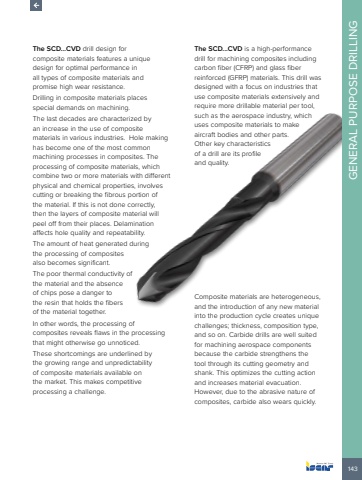
143GENERAL PURPOSE DRILLINGThe SCD%u2026CVD drill design for composite materials features a unique design for optimal performance in all types of composite materials and promise high wear resistance.Drilling in composite materials places special demands on machining.The last decades are characterized by an increase in the use of composite materials in various industries. Hole making has become one of the most common machining processes in composites. The processing of composite materials, which combine two or more materials with different physical and chemical properties, involves cutting or breaking the fibrous portion of the material. If this is not done correctly, then the layers of composite material will peel off from their places. Delamination affects hole quality and repeatability.The amount of heat generated during the processing of composites also becomes significant. The poor thermal conductivity of the material and the absence of chips pose a danger to the resin that holds the fibers of the material together. In other words, the processing of composites reveals flaws in the processing that might otherwise go unnoticed.These shortcomings are underlined by the growing range and unpredictability of composite materials available on the market. This makes competitive processing a challenge.The SCD...CVD is a high-performance drill for machining composites including carbon fiber (CFRP) and glass fiber reinforced (GFRP) materials. This drill was designed with a focus on industries that use composite materials extensively and require more drillable material per tool, such as the aerospace industry, which uses composite materials to make aircraft bodies and other parts. Other key characteristics of a drill are its profile and quality. Composite materials are heterogeneous, and the introduction of any new material into the production cycle creates unique challenges; thickness, composition type, and so on. Carbide drills are well suited for machining aerospace components because the carbide strengthens the tool through its cutting geometry and shank. This optimizes the cutting action and increases material evacuation. However, due to the abrasive nature of composites, carbide also wears quickly.


